
Acquiring a user takes effort and money. The number that decides whether an affiliate is profitable is not what you earn on that first sale, but how many times you get paid for the same user without acquiring them again. That is the gap between income that dries up in forty-eight hours and income that keeps arriving while the account stays alive. The lifetime model is built on exactly that idea, and understanding it properly changes how you pick a program, how you read a campaign and where you decide to spend your traffic.
What a lifetime commission actually is
A lifetime commission is a recurring payment triggered every time a user you referred spends again, with no expiry date while the account stays active. You do not get paid only for the first purchase: you take a share of that person’s entire future spend, automatically, without having to bring them back to the site.
The point is not one big one-off payment but many small commissions spread over months on the same user. An affiliate with two hundred active users who each spend a little every week can bill more, and far more steadily, than someone who lands a single large sale and then has to start from scratch.
Lifetime versus short-cookie attribution
The technical difference is the attribution window, meaning how long the system credits you as the source of a user. With short cookies, if the person buys two weeks after the click, or returns on another device, that sale does not count as yours. The lifetime model fixes this by tying attribution to the user account rather than to a file the browser can delete.
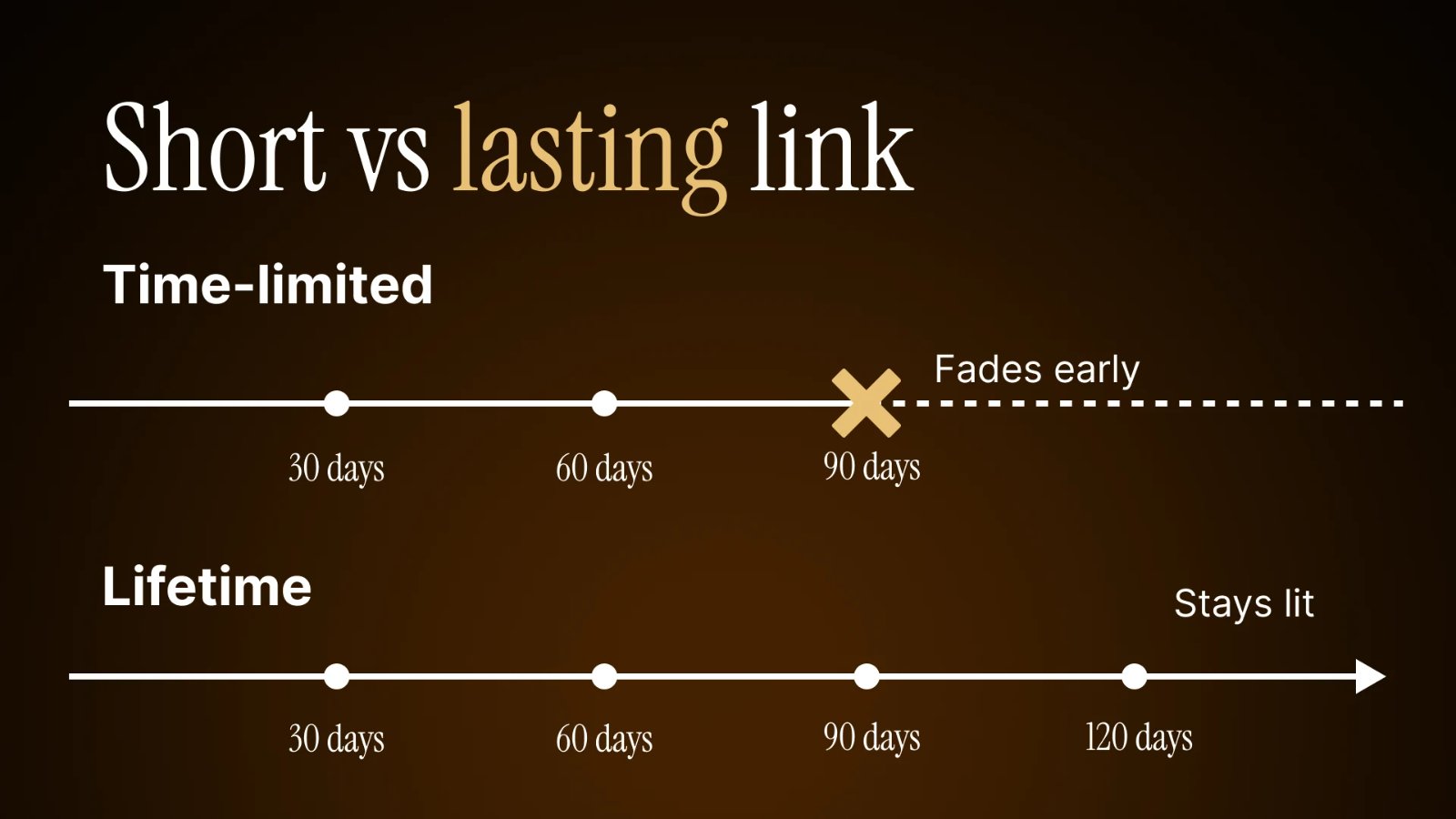
- Attribution window. Short cookie: hours or a few days. Lifetime: the lifetime of the account.
- When you earn. Short cookie: only the first conversion. Lifetime: on every recurring spend.
- Type of income. Short cookie: one-off, it runs out. Lifetime: cumulative and compounding.
- Reliance on new traffic. Short cookie: high, you must re-acquire. Lifetime: low, the referred base keeps paying.
- Best fit for. Short cookie: one-time payout offers. Lifetime: services with repeat spend.
How lifetime revenue share works, step by step
1. Attribution tied to the account
When a user arrives through your link and signs up, they are linked to your affiliate identifier inside the program’s system. That link does not depend on a cookie surviving: even if the person returns days later on a different machine and logs in, they still count as your referral.
2. A share of every spend
From then on, every purchase that user makes generates your percentage. This is a share of actual spend, not a flat payout per signup. The more your audience consumes, the more recurring income it produces on the same base of users you acquired only once.
3. The staircase effect
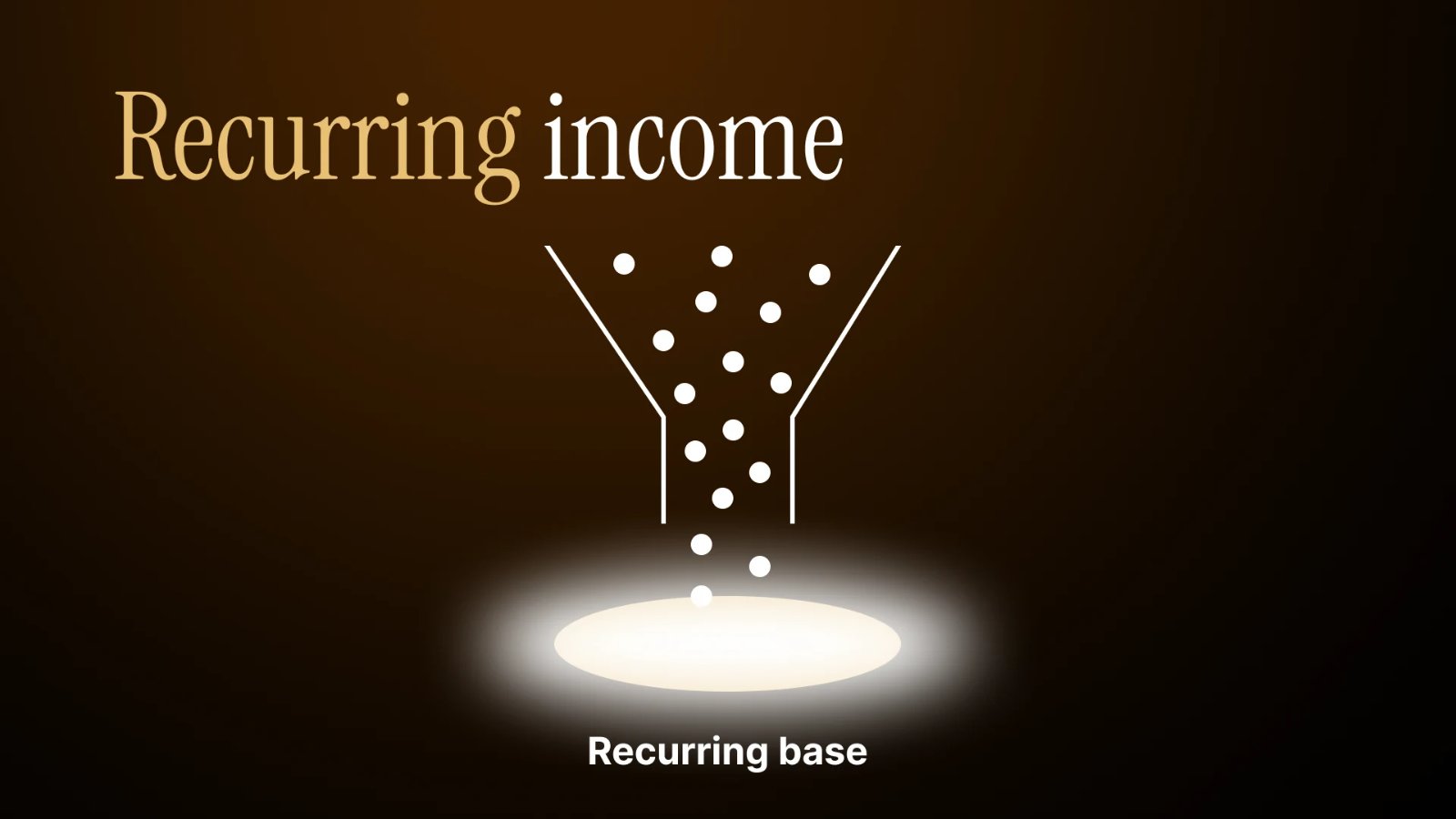
The value is not in a single user but in the sum. Each month you add new users on top of the previous ones and, because the older ones keep spending, your recurring income climbs like a staircase instead of resetting. That is why an affiliate who has run a lifetime program for a year usually has a bad month that is far higher than a beginner’s good one.
Why it fits live-content traffic so well
Live content produces repeat spend by its very nature. A satisfied user comes back, follows the same creators, buys again and joins more sessions. That recurring pattern is exactly what a lifetime commission rewards, while a one-time payout leaves all that future value on the table the same day the first action is paid.
Put differently: with this kind of traffic, a user’s first purchase is almost never their last. Lifetime turns the user’s recurrence into your recurrence.
How to work out what a user is worth (illustrative example)
The figures below are a made-up example to show the mechanism, not a real performance number. Results depend on your traffic, your niche and the quality of your audience.
Take a referred user who spends 30 a month on average and stays active for eight months, at a 20 % share:
- Total user spend over eight months: 30 × 8 = 240
- Your lifetime commission at 20 %: 48 from that single user
- With a model that paid only the first purchase, you would collect a fraction and nothing more
Multiply that 48 by dozens or hundreds of accumulated users and you see why lifetime is measured in months of recurrence, not stray clicks. The same acquisition effort pays out for far longer.
What to check before choosing a lifetime program
That it is genuinely lifetime. Some programs call a twelve-month recurrence “lifetime.” Read the terms before assuming anything.
How they attribute. Prefer account-based attribution over cookie-only, because the cookie gets deleted and the account does not.
Payment frequency and threshold. How often they pay and the minimum matter as much as the rate, because they shape your real cash flow.
Quality of conversion tools. A high rate is worthless if the site does not convert. Dynamic widgets, banners that perform and white-label options add more than a couple of commission points.
Reporting transparency. You need to see which tool converts and where buyers come from so you can optimise instead of guessing.
Common mistakes with the lifetime model
Comparing only the percentage. A higher share on a site that does not convert pays less than a lower one on a site that does.
Ignoring the real attribution length. A lifetime with ninety days in the fine print is not lifetime.
Not measuring average spend per user. Without that figure you cannot estimate recurring value or know how much an acquisition is worth.
Re-acquiring instead of accumulating. The classic error is chasing new clicks while forgetting that the referred base already pays on its own.
Frequently asked questions
What is a lifetime commission in affiliate marketing?
It is a recurring payment you earn every time a user you referred spends again, with no time limit while the account stays active. Instead of earning only on the first sale, you share in all their future spend through a revenue-share percentage.
Is lifetime better than a one-time payout?
It depends on your traffic. A one-time payout lands fast and fixed; lifetime pays less at first but accumulates and compounds if your audience spends repeatedly. For recurring traffic, lifetime usually wins over the medium term.
What happens if the user clears their cookies?
With account-based attribution, clearing cookies does not cost you the commission: the link to your affiliate identifier lives in the program’s system, not in the person’s browser.
How long before the lifetime effect shows?
The first weeks look like any other model. The difference appears once the referred base grows and older users keep spending on top of new ones, so recurring income compounds month after month.
Conclusion
Lifetime does not reward whoever buys the most clicks; it rewards whoever builds a base of users that keeps spending. Choose a program on the quality of its conversion and attribution, measure your audience’s average spend, and let recurrence do the heavy lifting month after month. It is a model that pays back judgement and patience, not impulse.
At Amateur Cash we run a 20 % lifetime revenue share on the spend of every user you refer, with payments twice a month and a 100 minimum. If you want to build recurring income from real amateur traffic, you can sign up at amateur.cash/en or reach us on Telegram at @amateurtvcash and we’ll answer your questions before you start.