
Two affiliates can send the same volume of traffic to the same offer and get opposite results. The difference is often not the quantity but where that traffic comes from and whether the offer fits that place. Segmenting by geography (country, language and sometimes region) is one of the levers that most changes the profitability of an adult affiliate campaign, and one of the most ignored by anyone who only looks at the total click count.
GEO targeting comes down to five fronts: market tiers, language and creatives, local payment methods, measurement kept separate by geo, and the concrete headroom in Spanish-language traffic. We’ll take them one at a time.
What segmenting by geo means (and what it does not)
Segmenting by geo means adapting the offer, language, creative and revenue expectation to the place the user comes from. It is not just picking a country from a dropdown. A user from a Spanish-speaking market, one from a high-spending country and one from an emerging market are not worth the same, do not speak the same way and do not respond to the same image. Treating them as a single block leaves money and conversion on the table.
Geo acts on three things at once: how much that user tends to spend, which language you have to speak to them and which payment methods and tone feel familiar. Ignoring any of the three breaks the conversion chain even when the click is cheap.
Geo tiers
A practical way to order markets is to group them into tiers by purchasing power and online-spending maturity. It is a simplification, not a law, but it helps you decide where to invest effort and what to expect from each area.
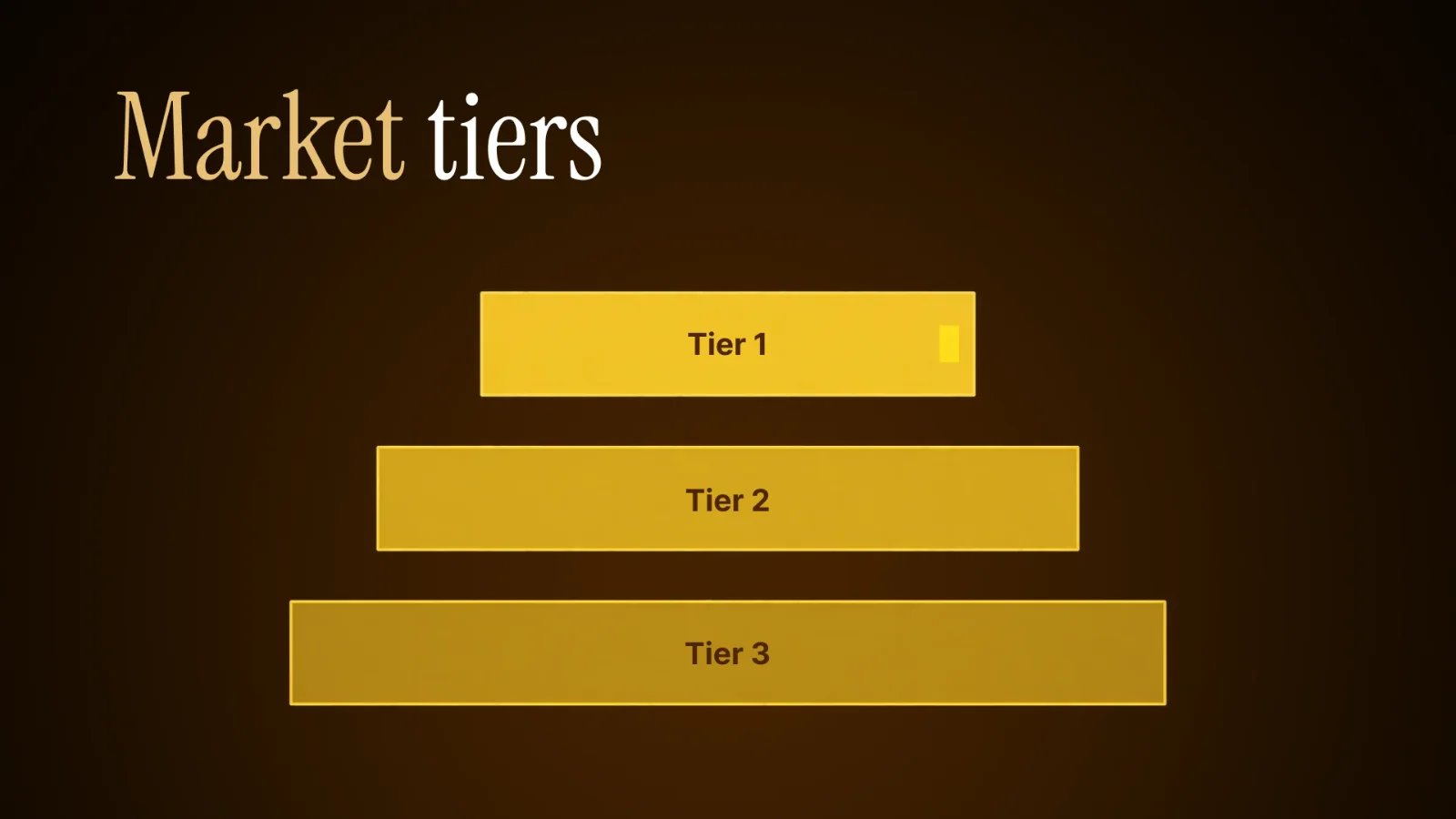
- Tier 1: high-spending markets with well-established online payment. Expect higher revenue per user, more competition and a higher traffic cost.
- Tier 2: intermediate markets with growing online spend. They give a good balance of volume and value, with less saturation.
- Tier 3: emerging markets with high volume and lower average spend. Traffic is abundant and cheap, and is best monetised by volume.
The lesson is not to go to Tier 1 only. A well-worked Tier 2 or 3, with local language and creatives, often performs better per unit invested than fighting in a saturated Tier 1 with a generic message. The tier does not tell you whether a geo is good; it tells you which strategy it asks for.
Local language and creatives
Language is the first conversion barrier. A user who receives the message in their own tongue, with the expressions they recognise, trusts sooner and clicks more. Translating is not enough: you have to localise. A creative that works in one Spanish-speaking country will not necessarily work the same in another, even if they share a language, because references, tone and even the kind of image that grabs attention change.
Good practices for localising:
- Adapt the language to the user’s, not to the country where you happen to live.
- Use the local variants of a single language when there are clear vocabulary differences.
- Adjust the creative to each market’s visual taste instead of reusing the same one everywhere.
- Test several angles per geo and keep the one that converts, not the one you like most.
Local payment methods
Conversion often drops at the last step: payment. A user who cannot find a familiar method walks away, even when everything before convinced them. Each market has its preferences (cards, wallets, mobile payment, local solutions) and an offer that covers them converts more than one offering a single method designed for another country.
As an affiliate you do not control the payment gateway, but you can choose to promote offers and brands that provide local options in the markets you work. That detail, invisible at the click, decides much of the final conversion. Before scaling a geo, check that the user will be able to pay the way they expect to pay.
How to measure by geo
You cannot optimise what you do not measure separately. The most common mistake is looking at the total and deciding on an average that hides opposite realities: a profitable geo subsidising a losing one. Splitting the numbers by geo is what turns a hunch into a decision.
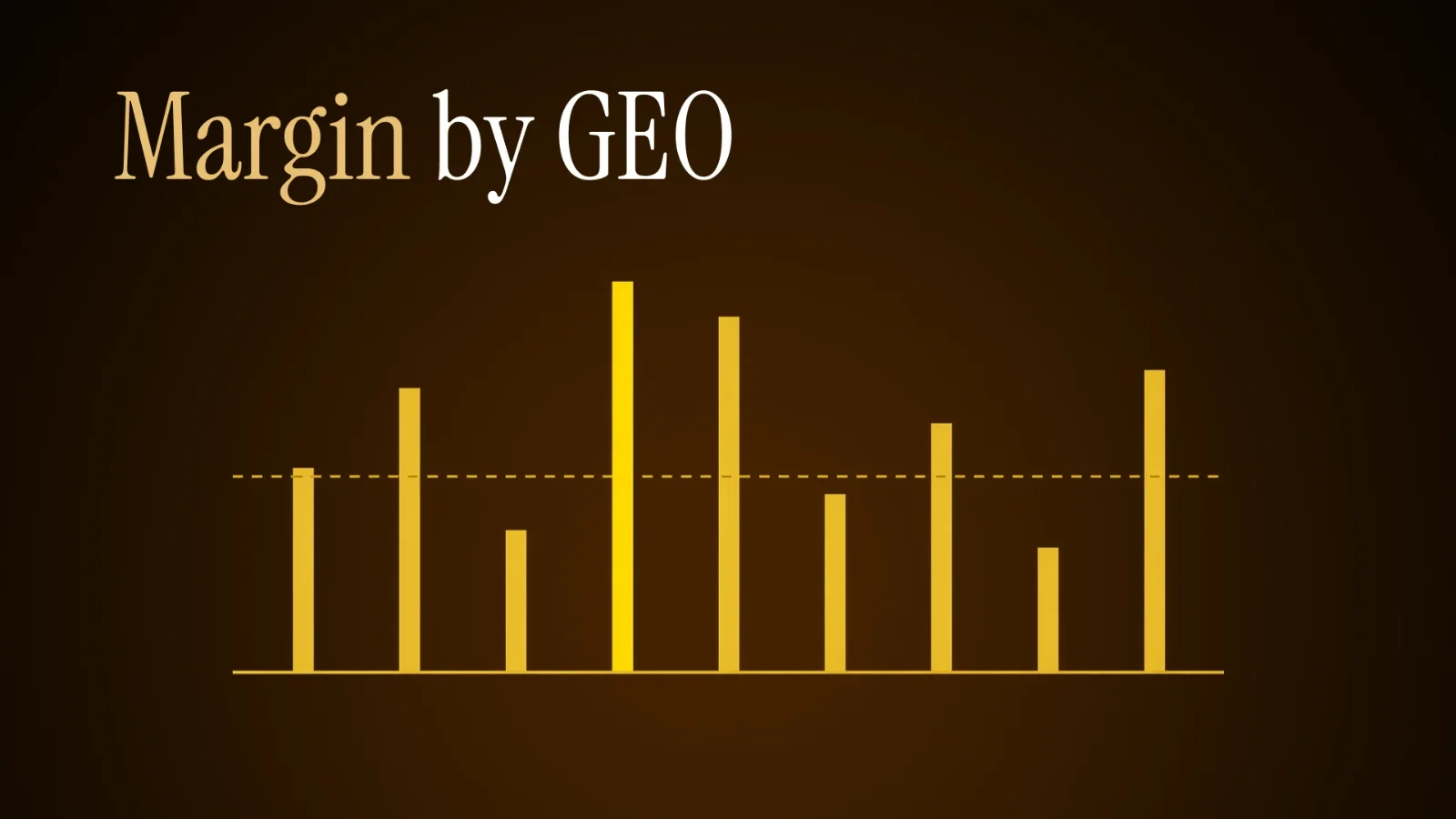
To measure by geo:
- Tag each campaign with sub-IDs that include the country or language.
- Compare earnings per click, not just conversions: a country may convert less and pay more per user.
- Separate traffic cost by geo, because a cheap conversion in Tier 3 can beat an expensive one in Tier 1.
- Let each geo run long enough before you judge it; small volumes mislead.
Illustrative example: if a geo returns 0.10 in earnings per click on traffic that costs you 0.03, it performs better than one returning 0.20 but costing 0.18. The number that matters is the margin per geo, not the headline commission or the mixed total. The figures above are only an example to explain the calculation, not a benchmark.
Where Spanish/LATAM traffic can convert best
Spanish-language traffic has an advantage many affiliates underrate: it is a huge market, with less saturation of well-localised offers than the large English-speaking markets and with clear demand for content in its own language. Amateur.tv is a well-recognised brand in Spanish-speaking markets and across LATAM, which lowers the trust friction that does exist when promoting something unknown: the user arrives at a name that rings a bell.
To work Spanish and LATAM well:
- Speak in real Spanish, with the variant that matches each country.
- Lean on brand recognition in the creative rather than starting from zero.
- Account for purchasing-power differences within the Spanish-speaking world: Spain, the Southern Cone, Mexico, Central America and the Andean region do not behave the same.
- Prioritise the payment methods common in each country over a single method.
The result is traffic that usually comes cheaper than English-speaking Tier 1, with a lower trust barrier and room to scale once you find the local angle that works.
Common mistakes
- Treating traffic as a single block without separating by geo.
- Translating instead of localising, and using one Spanish variant for the whole Spanish-speaking world.
- Judging a geo by its conversions without looking at earnings per click or traffic cost.
- Sending Tier 3 traffic to offers designed for Tier 1 and concluding that country does not convert.
- Ignoring local payment methods and losing the sale at the last step.
- Scaling a geo on a few days of data, when the volume says nothing reliable yet.
Frequently asked questions
What is a geo tier?
It is a way of grouping markets by purchasing power and online-spending maturity. Tier 1 gathers high-value, high-competition markets, Tier 2 intermediate growing markets, and Tier 3 emerging markets with high volume and lower average spend. It is a guide for deciding strategy, not a quality label.
Is Tier 3 traffic useless?
It is useful if you monetise it for what it is. Tier 3 brings volume at low cost; the mistake is sending it to offers designed for Tier 1 and expecting the same revenue per user. With local language and creatives and a suitable offer, a well-worked Tier 3 can leave a better margin than a saturated Tier 1.
Why is Spanish/LATAM traffic interesting?
Because it is a large market, with less well-localised competition and a lower trust barrier when the brand is already known in the region. That lets you get cheaper traffic than in English-speaking Tier 1 and scale once you hit the local angle that converts.
How do I start segmenting if I only have mixed traffic?
Start by measuring. Add sub-IDs by country or language, let the traffic run for a few days and look at earnings per click and cost per geo. Those numbers show which geos hold the campaign up and which drag it down, so you can localise creative and language where it matters most before scaling.
Every country converts differently, and your payout model should follow the same logic. Let’s talk on Telegram @amateurtvcash and work out whether RevShare, PPL or PPS fits the markets you focus on. All the info is at amateur.cash/en.