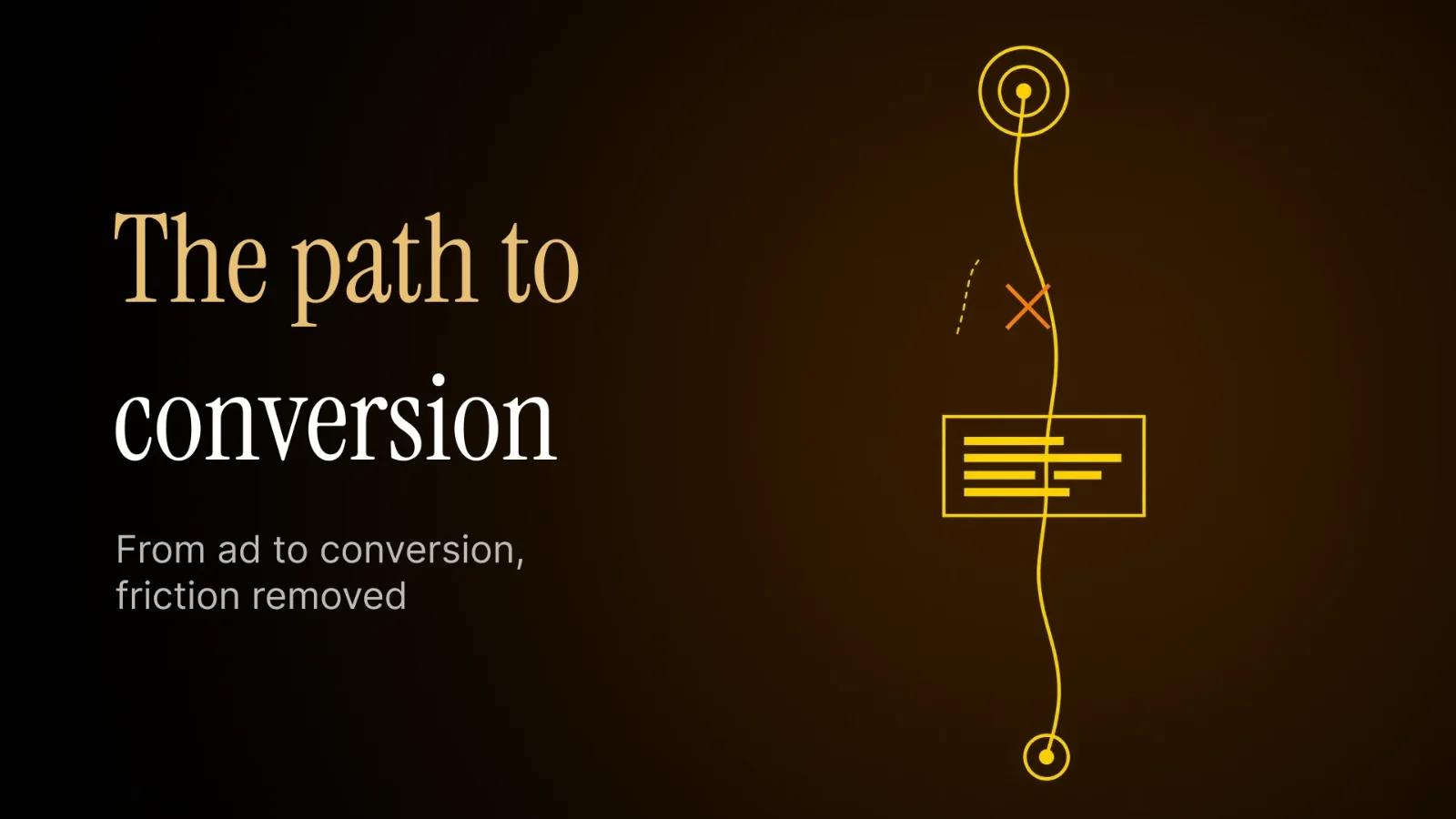
The click is already paid for. It does not matter whether it came from a search engine, a forum or a campaign: the moment the user lands, you have already covered the cost. What decides the margin is what happens next, on the path from that click to the conversion. That is where the money is won or lost, and that is where CRO works.
Optimising conversion for adult traffic has its own rules: heavy mobile volume, very specific expectations and big differences between countries. Here are the seven levers that weigh most on conversion, how to work each one and the typical mistake that holds it back.
Start with the funnel, not the lone landing page
The most common starting mistake is treating conversion as a single-page problem. It is not. The user travels a path (ad, pre-lander, offer, action) and conversion drops at the weakest link, which is rarely the one you are looking at. Before you tweak a headline, look at the whole journey and find where people actually leave. It is almost always earlier than you think.
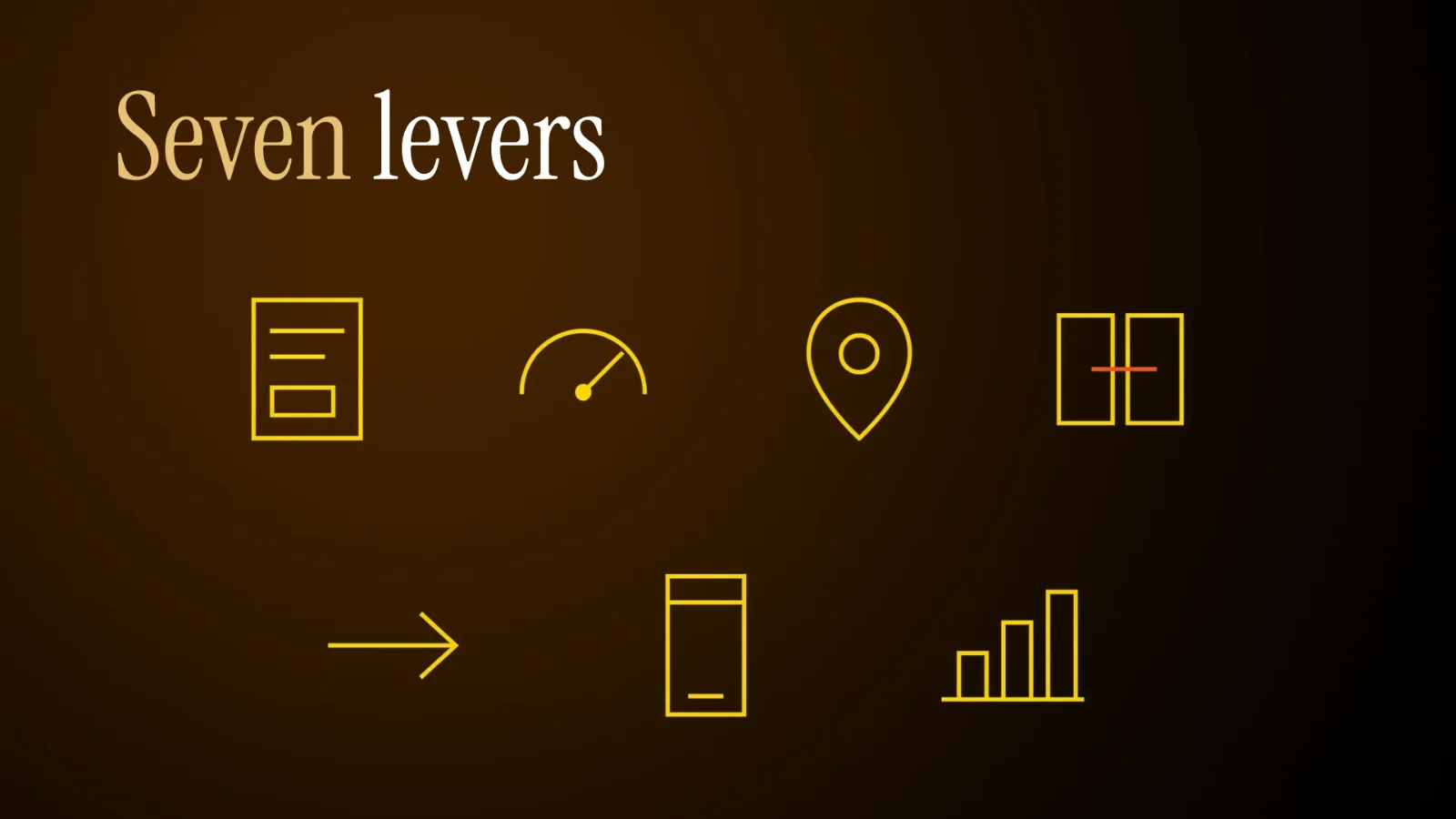
Seven levers that move conversion
Here they are, from the first screen through to measurement:
Pre-landers that prepare the decision
A pre-lander is the page between the ad and the offer. It does not sell directly: it sets context, filters intent and prepares the user for the next step. In adult traffic, where the user arrives with very specific expectations, a well-built pre-lander aligns the ad message with what they will find and cuts the bounce on the offer.
How to work it: keep one idea per pre-lander, match it to the ad angle and cut everything that does not push the click. A pre-lander full of options scatters attention; one with a single path converts.
Load speed
On mobile, every second of waiting loses users you already paid for with the click. A slow page is abandoned before the offer even shows, and the problem is not always in your copy: it is usually heavy images, third-party scripts and chained redirects that pile up without you seeing them.
How to work it: compress creatives, reduce redirects, load what is visible first and measure on real mobile connections, not your wifi. Speed acts before any other lever: it does not matter how good the rest is if the page will not load in time.
Offer-to-traffic fit by geo
The same offer does not perform equally in every country. Language, common payment methods, purchasing power and cultural expectations completely change conversion. Sending traffic from one geo to an offer built for another is one of the quietest leaks, because global metrics hide it.
How to work it: segment by geo from the start, adapt language and currency, and prioritise offers that accept local payment methods. Run the same creative in two countries and you will see the same message does not convert the same.
A/B testing with method
Eyeballing two versions is not a test. A useful A/B changes one variable at a time, defines in advance which metric decides, and waits for enough volume before concluding. Without method, you mistake noise for signal and “win” with whichever version got lucky that week.
How to work it: a clear hypothesis, one variable per test (headline, CTA, image or pre-lander), a defined winning metric and the patience to reach stable data. Document every test so you do not re-run what you already know.
CTA clarity
The call to action is where the click is decided. A vague, hidden CTA, or one competing with five other elements, leaves the user unsure what to do, and doubt does not convert. Clarity beats creativity: the user has to understand in one second what happens when they tap.
How to work it: one main CTA per screen, a direct verb that says exactly what happens on tap, and a visible position with no need to scroll. Fewer options, more conversion.
Mobile experience
Most adult traffic arrives on mobile, so mobile is not a shrunken version of desktop: it is the main one. Small buttons, long forms, text that forces zooming or pop-ups that cover the CTA break conversion even when desktop looks perfect.
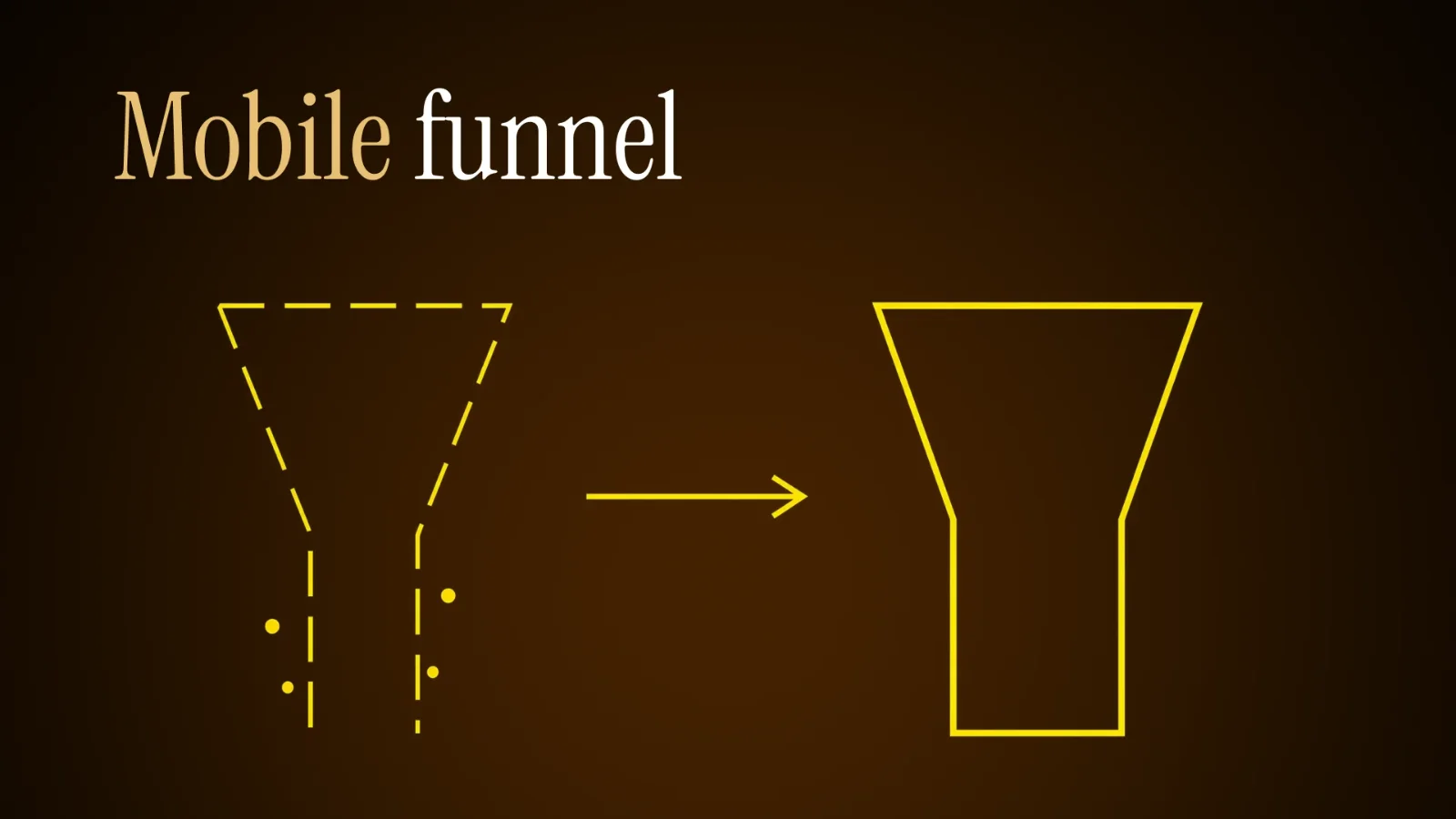
How to work it: design mobile-first, with large buttons reachable by thumb, minimal forms and nothing covering the main action. Check every page on real devices before you scale spend.
Measurement: no data, no CRO
Without measurement, optimisation is intuition in disguise. You need to know which source, creative and pre-lander convert, and that takes tags (sub-IDs) per variable and tracking that records the conversion even when the user switches device.
How to work it: tag every source and creative, lean on server-side tracking (S2S) so you do not lose mobile sales, and review earnings per click by segment, not just the total. What you do not measure you cannot improve; what you measure wrong makes you optimise backwards.
The seven levers at a glance
- Pre-lander: work a message aligned with the ad. The typical mistake is a page loaded with options.
- Speed: optimise images, scripts and redirects. The typical mistake is measuring on desktop only.
- Geo: adjust language, currency and local payment. The typical mistake is the same offer for every country.
- A/B testing: change one variable and pick one winning metric. The typical mistake is changing everything at once.
- CTA: leave one clear, visible call to action. The typical mistake is several CTAs competing.
- Mobile: design mobile-first. The typical mistake is treating mobile as a shrunken version.
- Measurement: use sub-IDs and S2S tracking. The typical mistake is looking only at the total.
An optimisation flow in practice
An illustrative example (the figures are only an example). A mobile campaign goes straight to the offer and stalls. Instead of raising spend, the affiliate adds a pre-lander aligned with the ad angle, compresses the images to cut load time and splits the traffic by country. Then they test two CTAs, one vague and one that says exactly what happens on tap. Measuring by sub-ID, they find a single geo concentrated the conversions and that the clear CTA won consistently. The traffic did not change; the path it travelled did.
Common CRO mistakes
- Optimising the landing page and forgetting the pre-lander and speed, which decide earlier.
- Changing several things at once and not knowing what moved conversion.
- Measuring on desktop only when traffic is mostly mobile.
- Using the same offer and creative for every geo.
- Filling the screen with CTAs and leaving the user without a clear path.
- Declaring an A/B winner without enough volume.
- Scaling spend before fixing the conversion leaks.
Frequently asked questions
Is a pre-lander worth it, or is it better to go straight to the offer?
It depends on the traffic, but in most adult-traffic cases a well-aligned pre-lander improves conversion because it prepares intent and filters cold clicks. The only way to know for your case is to test direct against pre-lander with the same source and compare real conversions.
How fast should a landing page load for mobile traffic?
The less, the better; there is no magic number, but the practical rule is that it should be visible and usable almost instantly on a normal mobile connection. Rather than chasing a figure, cut what is not needed: heavy images, third-party scripts and redirects. The improvement shows straight away in conversion.
Why does the same offer convert differently by country?
Because language, currency, common payment methods and cultural expectations change the buying decision. An offer that is perfect for one geo can fail in another purely on the payment method or the language of the copy. Segmenting by country and adapting the message usually recovers conversion that was leaking for no obvious reason.
When can I call an A/B test valid?
When you have gathered enough volume for the difference not to be chance, and you changed a single variable. Declaring a winner on thin data is the most common mistake: the version ahead on day one often flips as more conversions arrive. Define the metric and the minimum volume in advance.
Got your funnel built and want every paid click to earn its keep? Drop us a line and we’ll go through it with you. At Amateur Cash you can run RevShare, PPL or PPS, so you pick whichever fits the way your traffic converts. You’ll find us on Telegram @amateurtvcash and at amateur.cash/en.